CALL US TODAY
0410 655 648CALL US TODAY
0410 655 648
When planning ducted air conditioning in Wollongong, one important decision is how the system will be zoned. The number of zones influences far more than temperature control alone. It affects energy efficiency, day-to-day comfort, running costs and how effectively different parts of the home can be conditioned throughout the year. A well-designed zoning layout helps frequently used areas receive the right level of heating or cooling without wasting energy on rooms that are empty.
At Ben Air Conditioning, zoning is approached as a practical design decision rather than a one-size-fits-all feature. The ideal setup depends on the home’s layout, room usage, insulation, sun exposure and the capacity of the ducted system. Understanding how zoning works and how many zones a home actually needs can help homeowners achieve better comfort, improved efficiency and a system that performs reliably for years to come.
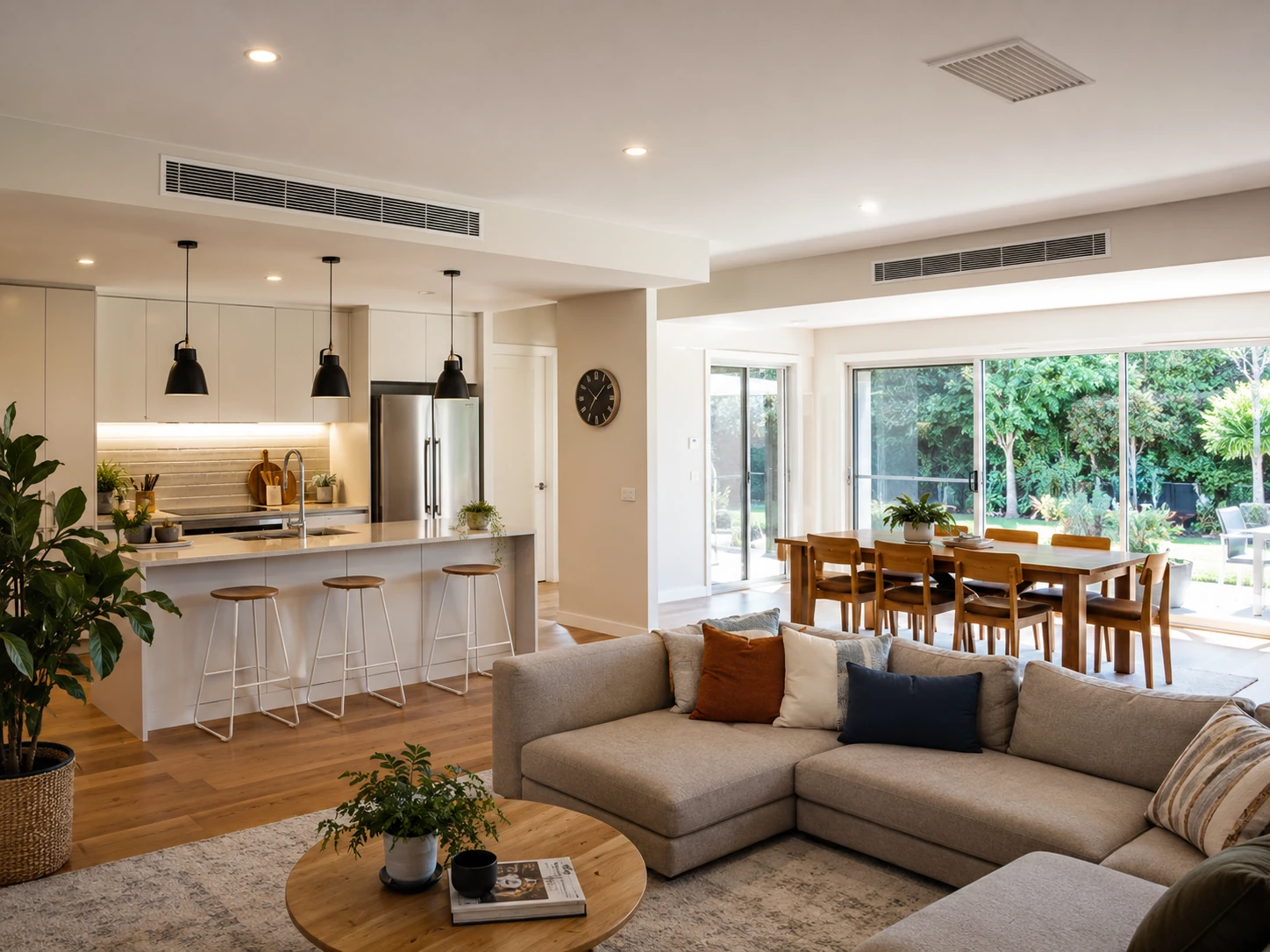
Ducted air conditioning zoning is a way of dividing a home into separate areas that can be cooled or heated independently. Rather than treating the entire house as one single space, zoning allows different rooms or groups of rooms to be conditioned at different times. Depending on the control system, some zones may also be managed with separate temperature sensors or settings.
The goal is to increase comfort where it is needed and reduce wasted energy where it is not. This is useful in homes where some rooms are used heavily while others are rarely occupied or only used at certain times of the day.
For example, living areas may need cooling during the afternoon and early evening, while bedrooms may only need conditioning at night. Zoning allows the system to reflect those usage patterns more closely.
In a zoned ducted system, the indoor unit is connected to a network of ducts in the ceiling or under the floor, just like a standard ducted setup. The difference is that each zone has its own motorised damper inside the ductwork. These dampers open and close to control airflow into that zone.
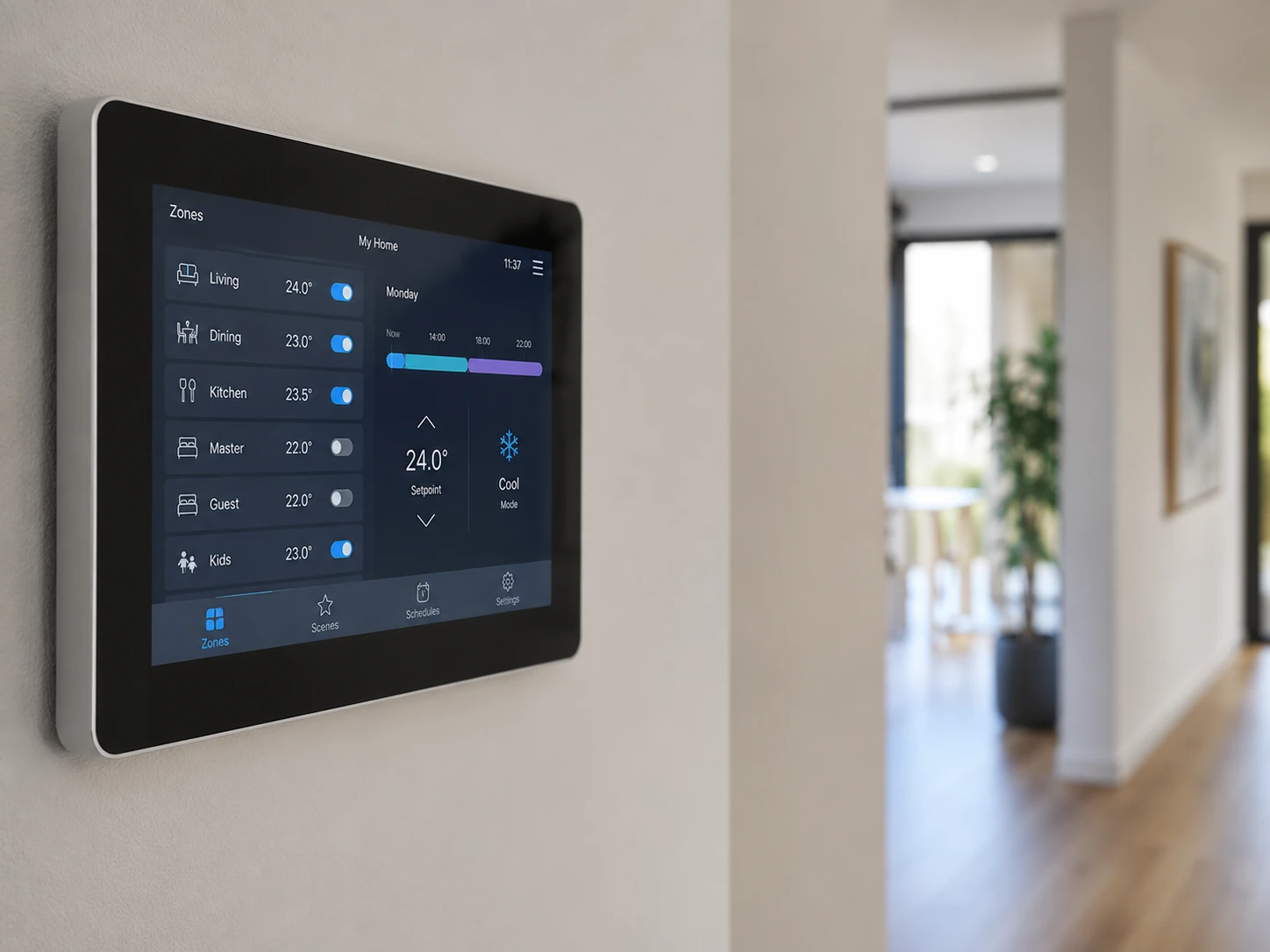
A central controller manages the system, while individual zone controls or a touchscreen interface allow specific zones to be turned on or off. In more advanced systems, each zone may have its own temperature sensor so the system can adjust output more accurately based on conditions in that area.
The quality of the zoning design matters. If zones are too large, the system may still condition unused areas. If zones are too small, airflow pressure, noise and system cycling can become an issue. The aim is to create practical groupings that support comfort without placing unnecessary strain on the equipment.
Zones are usually planned around how and when different areas of the home are used, not simply by following the floor plan. Larger open-plan spaces may be set up as one zone, while long corridors with multiple rooms might be split into separate zones for better balance.
Bathrooms and laundries are often grouped with nearby bedrooms or living areas rather than given their own dedicated zone. Guest rooms, studies, media rooms and children’s bedrooms may be treated differently depending on how often they are used.
The exact zoning layout depends on house size, number of occupants and daily routine. A family with young children may zone children’s bedrooms separately so those rooms can be conditioned earlier in the evening without running the entire house.
Zoning matters because a ducted system without zones must condition the whole house, even if only one or two rooms are in use. This can lead to higher power bills, uneven comfort and unnecessary wear on the system.
With zoning, the system can:
Effective zoning is therefore a key design choice. It affects how comfortable the home feels, how easy the system is to manage and how efficiently the ducted air conditioning operates over time.
Zoning should be tailored to how each home is actually used. The goal is to condition the spaces that matter at the right times without wasting energy on empty rooms. Getting the zoning layout right at the planning stage can have a major impact on comfort, running costs and long-term system performance.
Several factors determine how many zones are needed and where they should be placed. These include floor plan, occupancy patterns, building design, sun exposure, equipment capacity and possible future changes to the home.
A thoughtful zoning design balances comfort, control and cost rather than simply giving every room its own zone.
The first step is to consider which areas are used at different times. Living areas such as lounges, kitchens and family rooms often suit a shared daytime zone because they are occupied together. Bedrooms often form a separate night zone that can be run while living areas are off.
It can help to consider:
Spaces with similar usage patterns can usually share a zone. Rooms that need different run times, such as a home office used all day, may benefit from their own zone if the system can support it properly.
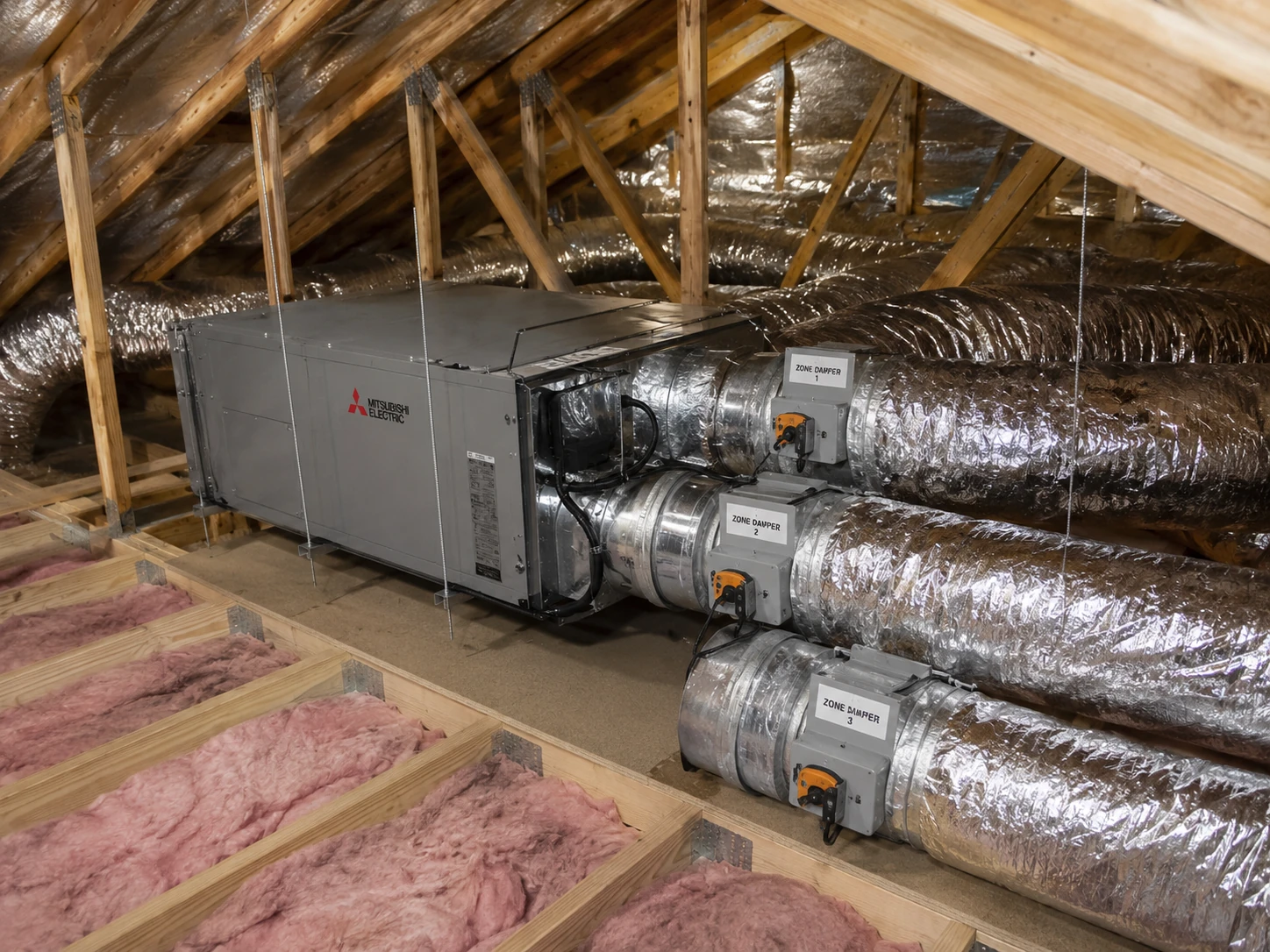
The physical layout of the home has a major influence on zone planning. Multi-storey homes often need at least one zone per level because heat naturally rises and upstairs areas can warm up faster. Long or spread-out floor plans may need additional zones so that distant rooms do not lag in temperature.
Orientation also plays a role. Rooms on the west or north side may receive more afternoon sun and often require more cooling than shaded or south-facing rooms. Combining high-heat and low-heat areas in the same zone can make it harder to keep temperatures even.
Ceiling height, insulation quality and window size should also be considered. Large open-plan spaces with high ceilings behave very differently from compact bedrooms. If one part of the home has large windows, poor insulation or strong afternoon sun, it may need separate control or additional airflow.
Zones must be sized to suit the capacity and airflow limits of the ducted system. A very small zone with only one outlet can create excess air pressure and noise if the system is not designed to manage partial loads. On the other hand, an oversized zone that includes half the house reduces the benefit of zoning and may waste energy.
Future changes should also be considered. If a study may become a nursery, a guest room may become a home office or an extension may be added later, the zoning layout should allow for flexibility where possible. Leaving provision for extra outlets, control wiring or future ductwork changes can help avoid more expensive alterations later.
Different home layouts tend to suit certain zoning patterns. The most efficient design usually follows how the household actually uses the space. The goal is to group rooms that are used at similar times and have similar comfort needs.
These examples can be adjusted depending on family size, lifestyle, building design and any problem areas in the home.
In smaller homes and units, fewer zones are usually required because rooms are close together and often share similar conditions. A typical setup is two zones:
This arrangement keeps costs and controls simple while still allowing bedroom cooling at night without running the whole system. In very compact floor plans, a single whole-home zone may be used, but this limits flexibility and can lead to higher running costs over time.
Where there is a home office used during the day, a third small zone for that room may be worthwhile. This can avoid cooling the entire bedroom area during work hours.
As homes grow in size, more zones are often needed to avoid wasting energy on unused areas. A common approach in three- or four-bedroom family homes is:
In this layout, daytime use is focused on the living area zone, with bedroom zones turned down or off. In the evening, the focus shifts so bedrooms can stay comfortable without overcooling large living spaces.
Two-storey homes often benefit from zoning that reflects both floor level and usage. Because heat rises, upstairs areas can become warmer than downstairs areas, especially in summer.
Common patterns include three to five zones:
In many homes, the upstairs and downstairs levels are treated as separate zones, with selected rooms split out where their usage or heat load is different. For example, a downstairs guest room that is rarely used may be better grouped into an occasional-use zone rather than tied to the main living area.
It is possible to have too many air conditioning zones, and it can create more problems than it solves. While zoning is useful for improving comfort and efficiency, splitting a system into too many small areas can increase cost, complicate control and affect system performance.
The right number of zones balances control with practicality. Each extra zone adds motors, wiring, controls and design complexity. If the system is not designed carefully, too many zones can reduce comfort rather than improve it.
Every zone requires its own motorised damper and control point. When there are too many zones, the system may operate with only a small portion of the ductwork open. This can result in:
This means a large ducted system may end up working hard to cool a single small room. Over time, that mismatch between system size and active zone size can increase energy use and place unnecessary wear on components.
Too many small zones can also make comfort harder to manage. Rooms that share walls or open into each other often influence each other’s temperature. If each of those spaces is given a separate zone, they may not perform as expected.
Over-zoning can lead to:
For example, an open-plan living, kitchen and dining area usually performs better as one coordinated zone rather than several separate zones. Grouping spaces with similar usage and sun exposure helps maintain stable, even temperatures without constant adjustment.
More zones can be beneficial when they follow sensible design principles. Extra zones are most useful when areas have different occupancy patterns, different heat loads or different comfort requirements.
This may include:
The key is to create zones that are large enough and used often enough to justify separate control. Small single-room zones can work in the right system, but they need to be planned carefully so airflow and equipment performance are not compromised.
Before committing to a zoning layout, it is important to discuss how the home is used day to day. The number and size of zones affect comfort, running costs and how hard the system needs to work. A quality installer should ask detailed questions and explain the trade-offs clearly.
Going into this discussion with a clear idea of your priorities helps ensure the zoning design suits both the building and the household rather than following a generic template.
Start with a room-by-room walkthrough. For each space, the installer should understand who uses it and at what times. Living areas, kitchens and family rooms are often treated as one main daytime zone, while bedrooms can be grouped as night zones if they are occupied at similar times.
Highlight rooms with special requirements, such as a home office that must stay comfortable during work hours, a nursery that needs a stable temperature for naps or a media room that is used only occasionally. The installer can then assess whether those spaces justify their own zone or can be grouped with nearby rooms.
The physical layout of the home strongly influences sensible zoning. Discuss how open-plan the main areas are and whether doors are usually left open or closed. Large open-plan spaces that are not separated by doors often work best as a single zone because air naturally moves between areas.
Separate wings, long hallways and multiple storeys may need extra zones so temperature can be controlled more accurately in each part of the home. Insulation quality and window size also matter. Rooms with large west-facing glass, poor insulation or strong sun exposure may heat up faster than others and require different airflow or separate control.
The number of zones must match the capability of the ducted unit and the zone control system. Discuss the minimum and maximum number of zones the chosen equipment can support and how many zones can run at once without reducing efficiency or creating airflow problems.
Budget should also be addressed openly. More zones usually mean extra zone motors, ductwork adjustments, control wiring and sensors, which increases upfront cost. The installer should be able to explain the difference between a simple layout with fewer larger zones and a more flexible layout with additional smaller zones.
It is also worth asking about control options. Clarify whether each zone will have its own temperature sensor or whether the system uses simple on-and-off dampers. Ask how airflow will be balanced, whether app control is available and whether scheduling can be set for different times of the day. These details affect how easy the system will be to use once installed.
Determining the right number of zones is one of the most important parts of designing an effective ducted air conditioning system. The best layout is not always the one with the most zones. It is the one that reflects how the home is used, maintains proper airflow and gives each area the right level of comfort without unnecessary energy use.
For Wollongong homeowners, a well-planned zoning design can make ducted air conditioning easier to use, more efficient and better suited to daily routines. Ben Air Conditioning can assess the layout, room usage and system requirements of the home to recommend a zoning setup that balances comfort, control and long-term performance.

