CALL US TODAY
0410 655 648CALL US TODAY
0410 655 648
Replacing your split system might look straightforward: remove the old indoor and outdoor units, connect the new ones and leave the existing pipes in place. If those pipes disappear into a finished wall, keeping them could also save the disruption and expense of opening up surfaces. However, an existing connection is not necessarily suitable for new equipment.
For homeowners in Kiama, deciding whether refrigerant pipes can be reused depends on their dimensions, condition and compatibility with the replacement system. Ben Air Conditioning assesses these factors before installation, helping you understand whether retaining the existing pipework is practical or whether new connections would be a better option.
Existing air conditioner pipes can sometimes remain in place, provided they meet the replacement system's requirements and are in suitable condition. Their age alone does not determine whether they can be reused, nor does the fact that the old air conditioner was still operating.
An air conditioning technician needs to evaluate the pipework against the specific replacement equipment. This involves checking dimensions, refrigerant and oil compatibility, manufacturer requirements and any evidence of deterioration or contamination. These considerations work together, as suitable dimensions cannot compensate for damaged pipes and good physical condition does not guarantee compatibility.
A split system has two refrigerant pipes connecting its indoor and outdoor units. The required dimensions depend on the equipment, so matching the old unit's cooling capacity does not automatically mean its pipes will suit the replacement.
Two systems with similar advertised capacities can have different pipe requirements. Pipe diameter, wall thickness and pressure suitability may all need consideration, particularly when replacing older equipment with a newer model that uses a different refrigerant.
A pipe that can physically connect to the new unit is not necessarily suitable for the complete installation. Its dimensions must meet the manufacturer's specifications, including any requirements relating to pipe length and installation conditions.
If you are still choosing a replacement system for your home, treat pipe compatibility as part of the installation assessment rather than assuming every model of a similar capacity will fit the existing infrastructure.
The refrigerant used by the old system matters, but it is only one part of the decision. The technician must also consider the oil associated with the existing equipment and what the replacement manufacturer permits when reusing older pipework.
A change in refrigerant does not automatically mean the copper pipes must be replaced. Some replacement systems allow existing pipework to be reused under specified conditions, which may include specific cleaning, flushing or preparation procedures. Other equipment may require new pipework because of differences in refrigerant compatibility, pressure requirements or installation specifications.
The technician should follow the replacement manufacturer's instructions rather than relying on a general assumption that existing pipes are always reusable. Any required cleaning, testing or preparation must be completed by a licensed professional.
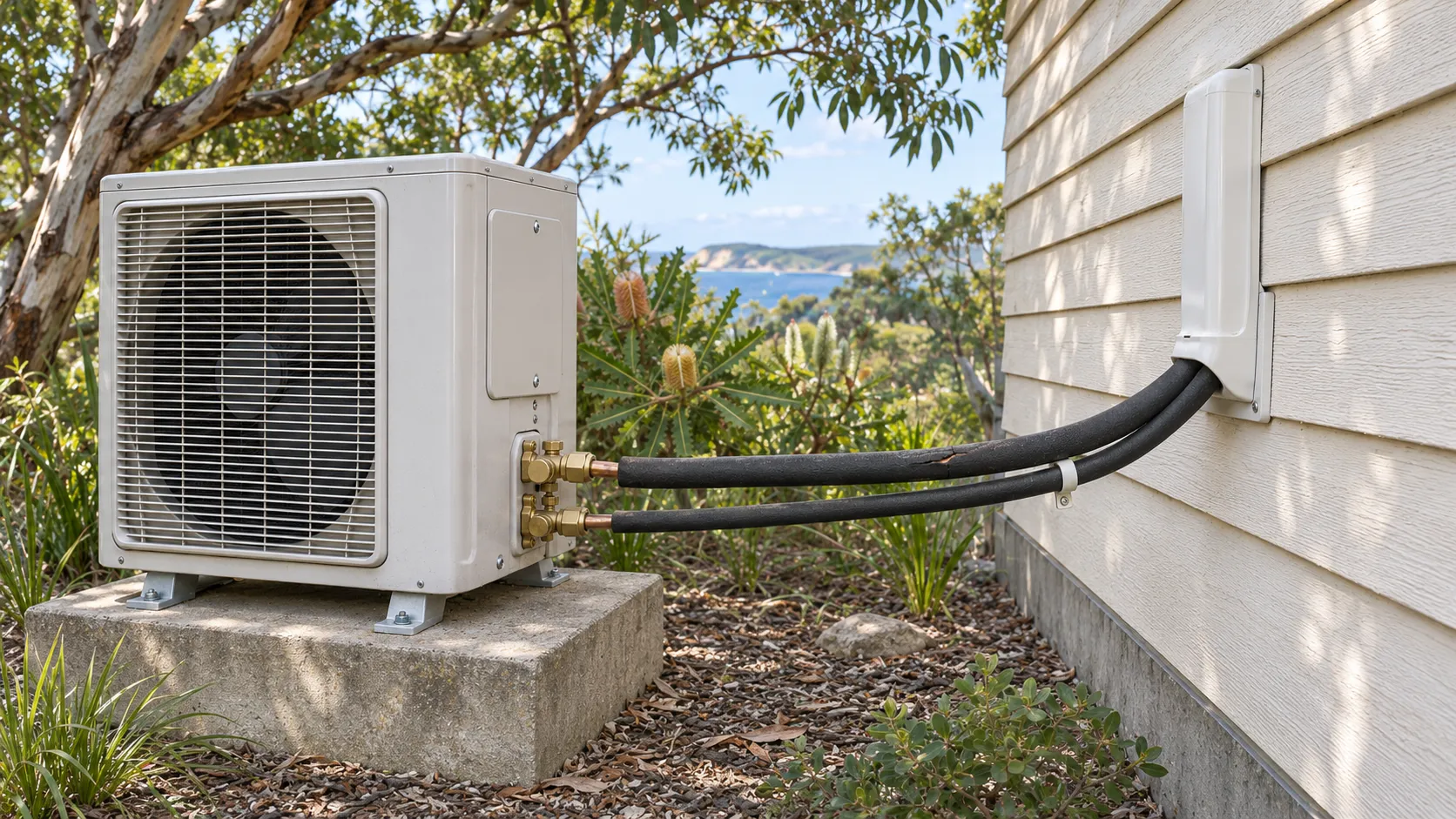
Even correctly sized and compatible pipes may be unsuitable if they have deteriorated or become contaminated. Signs of corrosion, crushed sections, previous leaks and questionable repairs can affect whether retaining the existing run is sensible.
The history of the old system also matters. For example, a compressor failure may introduce contaminants into the refrigerant circuit, affecting pipework that would appear serviceable. The appropriate response depends on the nature of the failure, the extent of contamination and the replacement manufacturer's requirements.
A tidy-looking exposed section does not establish the condition of everything behind the wall. Similarly, the absence of a known fault does not prove the pipes are suitable for another system. Tell the technician about previous refrigerant leaks, repeated repairs or major equipment failures so these details can inform the assessment.
Keeping a concealed pipe run may reduce disruption to walls and finished surfaces. However, concealment also limits what a professional can confirm before the old equipment is removed or additional access becomes available.
The existing route needs to work for the replacement system, not simply connect the two existing unit locations. Its accessibility, insulation, dimensions and overall condition can all affect whether retaining it is practical.
Imagine your home has a split system with refrigerant pipes that enter the wall behind the indoor unit and emerge near the outdoor unit. The exposed ends might look sound, while the concealed section remains largely unknown.
There could be a joint inside the wall, a damaged section or insulation that has deteriorated. These are possibilities to investigate, not reasons to assume every hidden pipe run needs replacing.
Pipe insulation is important because it helps prevent condensation from forming on cold refrigerant lines. If the insulation has deteriorated, moisture could affect surrounding building materials, even when the copper pipe itself remains serviceable.
Accessing a concealed problem may involve disturbing a finished surface. Installing a new route might avoid some of that disruption but introduce visible pipe covering or trunking elsewhere. The practical decision involves comparing the work required for each suitable option rather than assuming the existing route should always be preserved.
The total refrigerant pipe length and the vertical difference between the indoor and outdoor units must fall within the replacement equipment's specifications. These limits vary between systems and should be checked against the manufacturer's installation requirements.
A route that served the old equipment may not suit the new model, even when neither unit is moving. The technician may need to establish the total pipe length and height difference rather than judging suitability from the visible distance between the units.
This is relevant where pipes take an indirect path through a wall or ceiling. A short distance between visible connection points does not necessarily mean a short refrigerant pipe run.
If the existing route exceeds the replacement system's permitted limits, a different pipe arrangement or equipment position may be necessary. Any proposed changes should be assessed before installation proceeds.
The services connecting to your indoor unit perform different jobs. Refrigerant pipes form part of the cooling circuit, the condensate drain carries away water and electrical connections provide power and communication as required by the equipment.
Approval to retain one does not establish that the others can stay. An existing drain may have condition or fall problems, while electrical wiring may not meet the replacement system's requirements. Each needs a separate assessment.
When discussing air conditioning in Kiama replacement work, explain which sections are concealed and whether you have noticed water marks, drainage problems or previous repairs.
Refrigerant handling must be completed by refrigerant technicians, while electrical alterations must be carried out by licensed electricians. This helps ensure that all parts of the replacement installation meet the relevant requirements.
Reusing suitable pipes can reduce installation work, avoid unnecessary wall access and limit disruption to finished surfaces. However, these benefits only make sense when the existing pipework meets the replacement system's requirements.
The decision should balance technical suitability, accessibility, installation costs and the condition of the existing infrastructure. The cheapest initial option is not necessarily the most practical choice if retaining a concealed pipe run means carrying an unresolved problem into the new installation.
A visual inspection is useful, but it cannot establish every aspect of pipe condition or compatibility. Technicians may need information about the existing equipment, details of previous faults and appropriate testing to determine whether reuse is acceptable.
The assessment should consider several factors together:
Testing does not compensate for incorrectly sized pipes, and matching dimensions does not remove the need to assess their condition. These considerations work together to establish whether reuse is appropriate.
You should be able to understand the basis for the technician's recommendation. A useful explanation identifies what has been confirmed, what remains concealed and which requirements the existing pipework must satisfy. It should also distinguish a confirmed reuse decision from an allowance that depends on further inspection. Before approving the replacement installation, you can check your contractor’s NSW licence through Service NSW.
Replacing the indoor and outdoor units does not correct a defect in retained pipes. If the old system had a history of leaks, damaged pipework or suspected contamination, preserving the entire run could leave an unresolved issue connected to the new equipment.
However, not every equipment failure makes existing pipes unusable. The cause and consequences of the failure matter, and the technician should determine whether the pipework can be safely prepared for reuse or needs replacing.
Understanding the signs that an air conditioner needs repair or replacement helps you describe the old system's recent behaviour. However, the technician still needs to establish whether that history affects the condition or suitability of the refrigerant circuit.
New pipes may be preferable where the existing copper is damaged, contamination cannot be addressed or the current route cannot meet the replacement equipment's requirements. Depending on the layout, installing new pipework may involve opening wall sections, using surface-mounted trunking or repairing existing finishes.
Although this can increase the initial installation work, a suitable new route may be more practical than trying to preserve an unsuitable concealed connection.

Some uncertainty may remain until the old equipment is removed or a concealed section becomes accessible. Further inspection might reveal damaged insulation, an unsuitable joint, contamination or a pipe route that differs from what was expected.
Before work starts, ask how unresolved pipework questions will be handled and when you would be informed if the proposed installation scope needs to change. This establishes whether retaining the existing pipes is confirmed or conditional on further inspection.
If access reveals a problem, experts should explain what was found and why it changes the recommendation. Any revised plan should also identify the likely effect on wall access, visible pipe covering, installation costs or repairs to finishes.
Having this discussion beforehand makes it easier to compare the available options and understand the potential disruption before additional work proceeds.
Existing refrigerant pipes do not automatically need replacing when a split-system air conditioner reaches the end of its service life. If the dimensions, condition and compatibility meet the replacement manufacturer's requirements, retaining them may save unnecessary installation work and disruption. A proper assessment helps establish whether the existing route is suitable or whether new connections would provide a more practical installation.
Ben Air Conditioning checks the existing setup and explains the available options. Having the pipework checked before installation helps homeowners plan the work with a clearer understanding of the requirements, potential costs and any disruption to their home.

