CALL US TODAY
0410 655 648CALL US TODAY
0410 655 648
Smart air conditioning in Wollongong is no longer just a premium add-on. For many homes and small businesses, it is becoming a practical way to improve comfort, manage energy use and gain more control over how a system runs day to day. With features like Wi-Fi connectivity, app control and automation, these systems offer more than a standard unit, but the key question remains whether the added technology and upfront cost deliver enough real-world value.
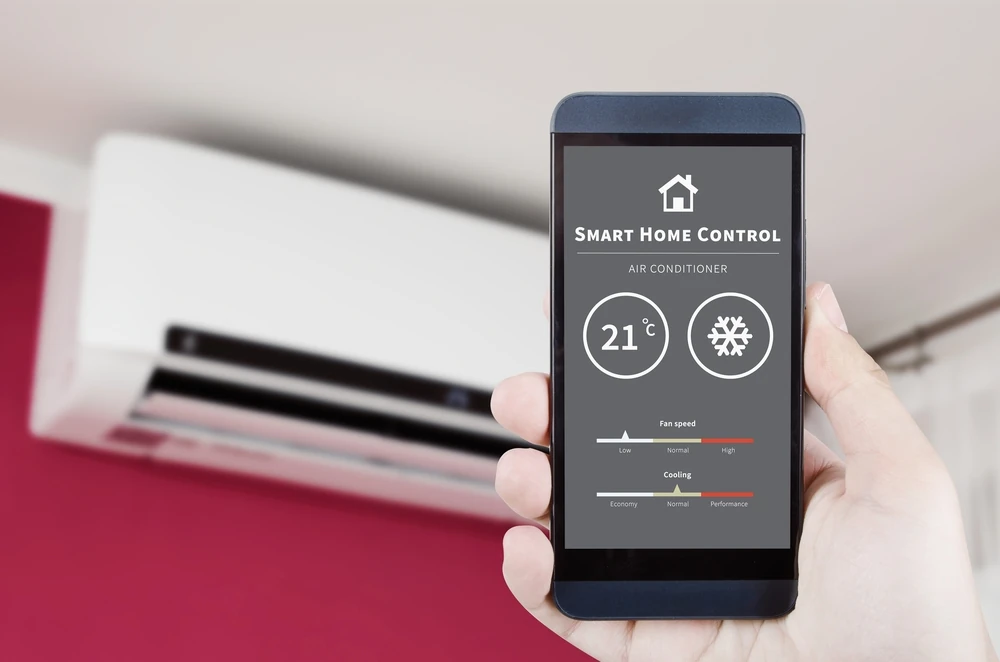
A smart air conditioner is simply a unit that can be controlled and optimised using connected technology instead of relying only on manual buttons or a basic remote. For homes and small businesses, this usually means better comfort control, easier operation and more insight into how much energy the system is using.
Smart features can be built into a new split system or ducted unit or added to many existing systems with a smart controller. Technicians help customers choose between factory-integrated smart models and retrofit options that suit their building and budget.
The core feature that makes an air conditioner smart is Wi‑Fi connectivity. Once connected to the building’s internet, the unit can be controlled through a smartphone app or web portal rather than only a handheld remote.
This allows users to turn the system on or off, adjust temperature or change modes from anywhere with an internet connection. For example, a shop owner can cool the premises before staff arrive or a homeowner can switch the system off if it was left running by mistake. Many apps also let multiple users share control, which is handy for families or small teams.
Wi‑Fi control often brings extra functions that a standard remote does not offer, such as finer temperature steps scheduling by day and time and quick access to manufacturer support information.
Smart air conditioners can follow detailed schedules rather than relying on someone to remember to press the on or off button. Through the app, users can set different temperatures and operating times for weekdays and weekends or match the system to trading hours.
Some systems include built-in motion or occupancy sensors that reduce output when a room is empty and resume full cooling or heating when someone returns. Others can link to smart thermostats or room sensors that help even out temperatures across larger or multi-room spaces.
These automation features are useful for small businesses that want to avoid staff constantly adjusting settings, which can lead to wasted energy and inconsistent comfort.
Many modern smart air conditioners and controllers integrate with popular smart home platforms. This means the system can be controlled through voice assistants or included in broader home or office routines.
For example, users can create a routine where lights, security and air conditioning adjust together when locking up a shop or leaving home. Voice control can be helpful in busy households or front-of-house areas where picking up a remote or phone is not convenient.
Integration also makes it simpler to add other devices, such as smart plugs or sensors, while keeping the air conditioner as part of a single connected setup.
Smart air conditioners can reduce energy costs, but how much they save depends on how the system is used, how well it is set up and how inefficient the previous routine was. For many homes and small businesses, the main benefit comes from reducing unnecessary run time, keeping temperatures more consistent and avoiding waste caused by manual operation.
In many cases, homes and small businesses may see noticeable savings, especially when smart scheduling, occupancy control and better temperature discipline replace inefficient manual use. The exact result varies depending on the building, the system and how it was being operated before smart features were introduced. Smart controls do not guarantee lower bills on their own, but they can make it much easier to manage a system more efficiently on a day-to-day basis.
Most savings do not come from the unit being “smart” on its own. They come from better control over when the system runs, how long it runs and how hard it works throughout the day.
Key drivers of savings include:
In homes, this often means breaking the habit of turning the unit on early and leaving it running for convenience. In small businesses, it can mean aligning operation more closely with opening hours, staff presence and quieter trading periods. Over time, those small improvements in control can make a noticeable difference to overall running costs.
For households that use air conditioning regularly during summer, smart controls can often reduce cooling costs when they replace less efficient habits. The biggest gains usually happen in homes where the system was previously left running for long periods, set too low or used without much consistency.
Savings are often more noticeable when:
If a household already uses its air conditioner carefully and turns it off whenever it is not needed, the financial benefit of going smart may be more modest. Even so, smart controls can still improve convenience, make usage easier to manage and help maintain a more consistent indoor temperature.
Small offices, shops, clinics, cafés and restaurant spaces often see clearer savings from smart air conditioning because their systems tend to run for long hours and are more likely to be left on unnecessarily. In these settings, smart controls can reduce waste without sacrificing comfort for staff or customers.
Savings usually come from features that allow the system to:
For many small businesses, these improvements can lead to more predictable operating costs and fewer instances of the system being left on overnight or during closed hours. The payback period will depend on the size of the premises, the system being used and the extra cost of the smart features, but the efficiency gains can be worthwhile where air conditioning plays a major role in daily running costs.
Smart air conditioning usually costs more upfront than a standard system, but many homes and small businesses recover that difference through lower running costs and better control. When deciding if it is worth it, the key questions are how much extra the smart features add to the price, what installation involves and whether the existing equipment can be upgraded rather than replaced.
Technicians assist customers in comparing options from simple smart controllers that work with an existing unit to fully integrated smart systems in new installations. In each case, weigh the initial cost against expected savings and convenience over the life of the system.
For properties with modern air conditioners, a smart controller or thermostat is often the most cost‑effective starting point. These devices usually sit in the low to mid hundreds of dollars for the hardware plus professional setup. They let users control temperature, schedules and zones from an app without replacing the main unit.
If the current system is old or unreliable, a new smart‑ready split, ducted or multi‑split system may be a better value. Compared with a similar non‑smart model, the smart version typically adds a modest premium to the equipment price. In many cases, this cost is offset by higher energy efficiency ratings and more precise control.
Small businesses should also factor in the opportunity cost of staff time. Automated schedules and remote access can prevent units from being left on overnight or during closed hours, which can account for a significant share of avoidable energy costs.
The complexity of installation depends on what is already in place. If the existing unit supports a common control interface, a smart controller can often be added with minimal disruption. Ben Air Conditioning usually checks:
For ducted systems, installation may involve fitting a central smart thermostat and connecting any motorised zone dampers so different areas can be controlled independently. For wall splits, the smart module is fitted near the indoor unit and connected to power and control terminals.
Beyond the upfront price, owners should consider ongoing costs. Smart air conditioners do not usually add significant maintenance expenses, but there can be:
In return, users gain detailed control that can reduce wasted energy. Features like occupancy detection and geofencing stop systems running in empty rooms. For small businesses, these savings accumulate over long trading hours and for homes, they help keep bills predictable during hot or cold seasons.
Smart air conditioning is not just a gadget for tech enthusiasts; it can be a practical upgrade that improves comfort and cuts running costs. The key is whether the way a space is used matches what smart controls do best: remote access, scheduling automation and detailed energy management.
In general, smart systems suit people who want tighter control over temperature and energy use across the day rather than simply turning the unit on and off. They are especially useful where occupancy is irregular or where bills are high enough that even modest efficiency gains make a difference.
Families and professionals who are often in and out are ideal candidates for smart air conditioning. If occupants leave at different times or plans change during the day, a traditional timer rarely lines up with reality. Smart controls let users:
This avoids cooling or heating an empty home while still keeping rooms comfortable when they are actually in use. It is useful for homes where some rooms, such as bedrooms or home offices, are used heavily while others are rarely occupied.
Smart air conditioning can help identify waste and reduce it through features like usage reports temperature limits and occupancy based automation.
For businesses, a smart system can keep conditions comfortable during open hours but automatically reduce output after closing. Owners can check from their phone that units are not left running overnight or on weekends which is a common source of bill shock. In homes that already use rooftop solar, smart controls can be timed to run harder during peak solar generation and scale back when grid power is more expensive improving the return on the solar investment.
Anyone responsible for more than one area or property should strongly consider a smart system. Examples include:
With smart controls, it is possible to manage all units from a single app instead of visiting each controller. Zoning can be used more effectively so only occupied rooms are conditioned.
Whether a smart air conditioner is worth it depends on how the property is used and how much control the owner wants over comfort and energy use. For households with changing routines and for small businesses operating across long hours, smart features can reduce wasted run time, improve convenience and make costs easier to manage. The upfront cost is higher, but when the system is chosen well and set up properly, smart air conditioning can be a practical long-term upgrade rather than just another tech feature.

